
Table of Contents
- Understanding the 2026 Tech Landscape: What’s Actually Changed
- Next-Generation Communication Devices That Actually Think
- Smart Home Integration: From Individual Devices to Unified Ecosystems
- Personal Wellness Technology: Beyond Fitness Tracking
- Work From Anywhere: Laptops and Portable Tech
- Photography and Videography: AI-Assisted Creative Tools
- Gaming and Entertainment Systems
- Home Climate Control and Air Quality
- Home Cleaning and Maintenance Automation
Key Takeaways
- AI-powered devices like the VERTU Agent Q represent a shift from app-based interfaces to intent-based interaction, making daily tech use more intuitive and efficient
- Security has become a defining feature of premium gadgets in 2026, with multi-layer encryption and biometric protection becoming standard expectations
- Smart devices are designed to anticipate user needs through machine learning, offering personalized experiences without constant manual input
- Durability combined with performance is now the baseline expectation, with manufacturers using aerospace-grade materials and extended warranties
- Wearable technology has evolved beyond fitness tracking to include comprehensive health monitoring, sleep analysis, and preventative wellness insights
- Photography and videography gadgets now feature AI coaching, automatic editing, and modular designs that adapt to different creative needs
- Work-from-anywhere devices prioritize portability without sacrificing performance, with all-day battery life becoming standard
Finding the right gadgets for the modern man requires understanding what actually improves daily life rather than chasing trends. In 2026, the technology landscape has matured significantly, with manufacturers focusing on devices that seamlessly integrate into your routine, enhance productivity, support health and wellness, and deliver entertainment experiences that justify their investment. Whether you’re a remote professional, a creative practitioner, a fitness enthusiast, or simply someone who appreciates well-engineered technology, this comprehensive guide explores the gadgets that are genuinely making a difference in how men live, work, and play. We’ve moved beyond gimmicks and flashy features to focus on practical innovation, reliable performance, and design that stands the test of time.
Understanding the 2026 Tech Landscape: What’s Actually Changed
The gadget market in 2026 reflects a fundamental shift in how we approach technology adoption. Rather than purchasing devices because they’re new, consumers are making intentional choices based on specific needs, long-term value, and integration with their existing ecosystems. This maturation has pushed manufacturers to compete on substance rather than novelty. The most successful products this year share several common characteristics: they use artificial intelligence to anticipate and adapt to user behavior, they’re built to last with premium materials, they prioritize security and privacy, and they solve real problems rather than create new ones.
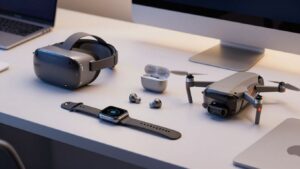
The rise of AI integration has fundamentally changed how devices interact with users. Instead of navigating complex menus or switching between multiple applications, modern gadgets now use natural language processing and machine learning to understand intent. This means fewer steps between wanting something done and having it completed. The technology industry has recognized that time is the most valuable resource, and the most sought-after gadgets are those that give it back to you.
Another major trend is the emphasis on durability and sustainability. As consumers become more environmentally conscious and financially prudent, they’re investing in devices built to last rather than replacing them every 12-18 months. This has led manufacturers to use premium materials like aerospace-grade titanium, improved cooling systems to extend device lifespan, and modular designs that allow component replacement rather than total device replacement. This shift away from planned obsolescence is reshaping how we evaluate value in technology.
Next-Generation Communication Devices That Actually Think
Communication technology in 2026 goes far beyond making calls and sending messages. Modern communication devices are now personal assistants that understand context, learn preferences, and manage your digital interactions with minimal friction. The most impressive examples showcase how artificial intelligence can transform the relationship between user and device, making technology feel responsive and intuitive rather than demanding and complex.
The VERTU Agent Q: Intelligence Redefined for Mobile
The VERTU Agent Q represents a paradigm shift in how premium smartphones approach user interaction. Rather than relying on traditional app-based interfaces, this device employs what VERTU calls “intent-based AI interaction.” In practical terms, this means you describe what you want accomplished, and the device’s AI agent handles the execution across whatever applications or services are needed. Want to schedule a meeting with someone while accounting for both of your locations and traffic patterns? Instead of opening your calendar, your email, and a maps application, you simply tell your phone to handle it. The AI agent manages the orchestration seamlessly.
The hardware design itself emphasizes luxury craftsmanship with genuine functionality. The U-shaped leather finish isn’t purely aesthetic but serves as a secure grip and thermal management system. The unique SIM chamber design is proprietary, adding another layer of security. The device runs on custom silicon designed specifically to handle AI workloads efficiently, meaning the AI features don’t drain battery performance. For users who move between different networks or countries frequently, the flexible SIM management is particularly valuable.
Beyond interaction models, the VERTU Agent Q prioritizes what many users consider most important: privacy and security. The device employs a five-layer security architecture that includes hardware-level isolation of sensitive operations, encrypted channels for all communications, and a distributed 10TB vault for storing sensitive data. This multi-layered approach means your personal information isn’t vulnerable at a single point of failure. The device can also be configured to automatically disable sensitive features when traveling to certain countries or in specific situations.
The real strength of this device lies in how it learns from your behavior. The AI agent tracks your patterns, preferences, and communication styles to make increasingly accurate predictions about what you might want done next. Over time, the system becomes so integrated with your workflow that using it feels less like operating a device and more like having a responsive assistant who understands your priorities and working style.
Security as a Core Feature, Not an Afterthought
Premium communication devices in 2026 treat security as a fundamental design principle rather than a feature bolted on afterward. This approach recognizes that a device containing your financial information, health data, location history, and private communications requires protection that goes far beyond a simple PIN code.
Multi-factor authentication has evolved beyond passwords and fingerprints. Leading devices now employ combinations of biometric authentication, location verification, and behavioral analysis. Some systems can detect unusual access patterns even from someone using your correct biometric data, alerting you if your device is being accessed from an unexpected location or in an unfamiliar way. This is particularly valuable if your device is lost or stolen.
Hardware-level encryption means that sensitive data is protected at the chip level, making it virtually impossible to extract information even if someone gains physical access to the device. This is far superior to software-only encryption, which can potentially be bypassed by accessing the device in certain ways. The VERTU Quantum Flip takes this further with a three-finger biometric data self-destruction mechanism that can automatically erase sensitive information if someone attempts to access it without proper authorization.
End-to-end encryption for communications is becoming standard rather than exceptional. This means that messages, calls, and file transfers are encrypted in a way that even the device manufacturer can’t access your data. This protects both your privacy and your security, as encrypted communications can’t be intercepted or accessed by unauthorized parties, including bad actors and, notably, government entities requesting data from service providers.
Smart Home Integration: From Individual Devices to Unified Ecosystems
The smart home technology available in 2026 has matured beyond individual gadgets that don’t communicate well with each other. Modern smart home systems function as integrated ecosystems where devices share information, learn from each other, and coordinate actions to create seamless living spaces. The best systems require minimal setup, work reliably even when your internet connection is temporarily interrupted, and give you meaningful control without overwhelming you with options.
Intelligent Home Control Without Complexity
The fundamental challenge with smart home technology has always been complexity. Earlier generations required significant technical knowledge to set up and maintain, with users constantly troubleshooting incompatible devices and wrestling with various proprietary ecosystems. The 2026 approach simplifies this dramatically through standardized protocols and smarter default configurations.
Modern smart home hubs use machine learning to understand your routines and automatically suggest automations that would simplify your life. For example, the system might notice that you always adjust the thermostat to a specific temperature around 6 PM in winter, and suggest an automation that does this automatically on days when the forecast predicts cold weather. Similarly, lighting can be automated based on your wake-up time, sunset, or when you arrive home, without requiring you to manually program each scenario.
Voice control has evolved to understand context and natural language in ways that previous generations couldn’t. Instead of requiring specific, command-like syntax, you can have natural conversations with your smart home system. You might say, “I’m cold and there’s a lot of dust” and the system understands to both raise the thermostat and activate air purification, or “Make it movie night” and the system dims lights, closes shades, and sets audio to optimal levels. This contextual understanding makes the technology feel like it’s working with you rather than requiring you to speak its language.
Privacy-First Smart Home Architecture
One of the biggest concerns with smart home technology has been data collection and privacy. The most advanced systems now operate primarily on local networks, processing information on your home hub rather than sending it to cloud servers for analysis. This means your daily routine data stays in your home, inaccessible to the device manufacturer or anyone else without direct access to your network.
Cloud integration remains optional for features that genuinely benefit from it, such as remote access when you’re away or integrating with external services. But the core functions of your smart home work perfectly well with your devices communicating only with each other and your local hub. This architecture provides both privacy and reliability, as your smart home continues functioning even if your internet connection goes down.
Energy Management and Sustainability
Smart home systems in 2026 increasingly focus on helping you understand and optimize energy consumption. Detailed monitoring shows not just how much electricity you’re using in total, but what percentage is consumed by different devices and when consumption occurs. This granular data helps you make informed decisions about appliance upgrades, usage patterns, and renewable energy investments.
For those with solar panels or other renewable energy sources, the system coordinates usage with generation, automatically running high-power devices like dishwashers or laundry equipment when solar production is highest. This optimization can significantly increase the return on investment for renewable energy systems. Battery storage systems integrate intelligently, charging during periods of low cost or high renewable generation and discharging during peak demand periods.
Personal Wellness Technology: Beyond Fitness Tracking
Wellness gadgets have evolved far beyond counting steps and calories. The most advanced personal health devices now provide comprehensive insights into how your body is functioning, identifying patterns that might indicate developing health issues before symptoms appear. These devices move healthcare from reactive (treating illness after it happens) to predictive (identifying and addressing issues before they become serious).
Comprehensive Health Monitoring Wearables
Modern health monitoring devices use multiple sensors to build a complete picture of your physical status. Rather than just tracking your heart rate, they monitor heart rate variability (HRV), blood oxygen saturation, sleep quality, temperature, respiratory rate, and stress levels. Some devices also measure blood glucose, blood pressure, and other biomarkers. The combination of these measurements, analyzed by sophisticated AI algorithms, can identify patterns that might indicate health issues requiring medical attention.
The Oura Ring 4 exemplifies this approach. Despite being small enough to wear constantly, this titanium ring collects data on sleep stages, movement, blood oxygen, temperature, and heart rate. The AI analyzes this data to assess your readiness for intense exercise, your recovery status, and your overall wellness trends. The device alerts you if it detects unusual patterns, such as signs of infection (indicated by elevated body temperature), so you can take action before a minor illness becomes serious.
The Luna Band takes a different approach, emphasizing screenless monitoring. This wristband tracks your diet (you can log meals by voice), exercise, and sleep without requiring you to constantly check a display. The intentional lack of screen reduces distractions and the temptation to compulsively check metrics, while still providing all the monitoring capabilities. This appeals to users who want health insights without their wellness device becoming another attention-demanding device.
What makes these devices valuable isn’t just the data collection but the analysis and actionable insights. The best systems provide specific recommendations based on your patterns. If your data shows that you sleep poorly after consuming caffeine after 2 PM, the system will remind you to avoid afternoon coffee. If your stress levels spike at particular times, the system can suggest when to schedule stress-reduction activities. If your activity levels drop for several days, the system can encourage movement without being preachy or judgmental.
Sleep Optimization and Recovery Tracking
Sleep quality has emerged as one of the most important factors in overall health, cognitive function, and emotional regulation. Advanced wearables now track not just how long you sleep but the architecture of your sleep, identifying which sleep stages you’re experiencing and for how long. This distinction is crucial because different sleep stages serve different purposes. Deep sleep supports physical recovery, REM sleep supports cognitive function and emotional processing, and light sleep supports memory consolidation.
Devices can now detect subtle variations in your sleep patterns and identify what factors affect your sleep quality. Does a late dinner disrupt your sleep? Do certain exercise times help or harm sleep? How does caffeine timing affect not just whether you can fall asleep but the quality of the sleep you get? By tracking these correlations, the system helps you optimize not just sleep quantity but more importantly, sleep quality.
Some advanced systems can even detect sleep disorders. If your data shows patterns consistent with sleep apnea, restless leg syndrome, or other conditions, the device can recommend that you discuss these patterns with a healthcare provider. Early detection of sleep disorders can prevent them from causing long-term health complications.
Mental Health and Stress Monitoring
The connection between physical measurements and mental health has become increasingly clear, and 2026 devices leverage this understanding. Heart rate variability is a particularly important indicator, as it reflects how well your nervous system is balancing between activation and relaxation. Low HRV can indicate elevated stress, poor recovery, or developing illness. When wearables detect concerning HRV patterns, they can suggest meditation, breathing exercises, or other stress-reduction techniques.
Some devices include guided breathing exercises that are specifically timed to influence your nervous system state. A 4-second inhale, 4-second hold, 4-second exhale pattern, repeated for a few minutes, can shift your nervous system from the stress-activated sympathetic state to the recovery-promoting parasympathetic state. Having a device guide you through this and provide biofeedback showing the effect on your HRV makes the practice more effective and more engaging.
| Device | Primary Function | Key Measurements | Best For |
|---|---|---|---|
| Oura Ring 4 | Comprehensive wellness monitoring | Sleep stages, HRV, temperature, blood oxygen | Users wanting detailed daily insights |
| Luna Band | Screenless health tracking | Diet, exercise, sleep patterns | Users avoiding device distraction |
| Apple Watch Series 15 | Integrated fitness and health | Heart rate, ECG, blood oxygen, workouts | Apple ecosystem users |
| Garmin Epix | Sports and performance tracking | Training metrics, elevation, navigation | Athletes and outdoor enthusiasts |
Work From Anywhere: Laptops and Portable Tech
The work landscape has fundamentally shifted toward flexibility, with professionals spending their time across home offices, coffee shops, co-working spaces, and client locations. This distributed work reality demands laptops and accessories that deliver full productivity without the weight and complexity of traditional desktop setups. The best portable work devices in 2026 balance raw processing power with genuine portability, exceptional battery life, and the ability to connect to your full suite of tools and peripherals seamlessly.
Ultraportable Powerhouse Laptops
Modern ultraportable laptops weigh between 2.5 and 3.5 pounds while delivering performance that rivals desktop computers from just a few years ago. This has been achieved through improvements in chip efficiency, better thermal designs that allow passive cooling in some situations, and architectural innovations that reduce the physical space needed for processing power.
Key specifications to prioritize depend on your specific work. Creative professionals (video editors, graphic designers, 3D modelers) need strong GPU performance, ample RAM (32GB minimum), and fast storage. Software developers benefit from fast SSDs, responsive CPUs, and multiple monitor support. Business professionals need long battery life, excellent display color accuracy, and powerful processors for multitasking.
The latest processors from both Intel and AMD deliver excellent single-thread performance for responsive interaction and strong multi-thread performance for handling complex tasks. Look for at least 16GB of RAM, though 32GB is increasingly standard for demanding work, and ensure the storage is an SSD with at least 512GB capacity, though 1TB is preferable for professionals working with large files.
Battery life has become a genuine differentiator. The best ultraportables now offer 15-18 hours of real-world usage, meaning you can work a full day plus some evening productivity without needing to charge. This changes how you work, eliminating the constant anxiety about finding an outlet and the constant searching for charging cables. Some devices support extremely fast charging (reaching 80 percent in 30 minutes) which is valuable during brief breaks.
Display quality matters significantly, as your screen is your window into your work. Prioritize high pixel density (at least 300 PPI), IPS technology for consistent colors across viewing angles, and either excellent brightness for working in bright environments or matte finishes to reduce glare. Many creative professionals opt for displays with high color accuracy (covered by 100 percent of the sRGB color space minimum, with wider color gamuts for advanced work).
Peripheral Ecosystem and Docking Solutions
A portable laptop becomes exponentially more productive when you can easily connect to multiple monitors, external storage, and other peripherals. Modern docking solutions have evolved to support multiple 4K displays while charging the laptop through a single USB-C connection, eliminating the cable management nightmare of previous generations.
Wireless peripherals have also improved significantly. Mechanical keyboards and mice designed for portability now deliver the responsiveness of their desktop counterparts while consuming minimal battery. Some use extremely efficient 2.4GHz connections that offer lower latency than Bluetooth, while others support multi-device pairing that lets you quickly switch between your laptop, tablet, and phone.
External storage has become increasingly important as cloud storage solutions address security and privacy concerns. High-speed external SSDs supporting Thunderbolt connectivity provide extremely fast transfer speeds, making it practical to work with large video files or extensive photo libraries without keeping everything on your laptop drive.
Audio and Video Quality for Remote Presence
For professionals spending significant time in video calls, the quality of your microphone and camera has become critical to your professional presence. Laptop-integrated microphones and cameras have improved, but external options remain superior for several reasons.
A quality external microphone that uses a cardioid pickup pattern captures your voice clearly while rejecting background noise. USB microphones designed for professional use offer excellent clarity at a reasonable price point. Positioning the microphone at the right distance and angle makes an enormous difference in how you sound to others on video calls.
External cameras offer better sensors and optics than laptop-integrated options, delivering clearer video. More importantly, you can position the camera at eye level, which is dramatically more flattering than the downward angle of laptop webcams. Some professional video cameras include auto-framing that keeps you centered in the video frame even as you move, and automatic focus that ensures your eyes remain sharp even if you move closer to or farther from the camera.
Photography and Videography: AI-Assisted Creative Tools
The intersection of artificial intelligence and creative tools has democratized high-quality photography and videography. Devices that cost less than professional camera equipment from just five years ago now deliver image quality that rivals cameras costing thousands of dollars, while AI handles technical aspects that previously required extensive training to master. This means more people can capture genuinely beautiful imagery, whether they’re documenting their lives or exploring photography as a creative practice.
Smartphone Photography Enhanced by Machine Learning
Smartphone cameras have become so capable that many professional photographers rely on them as their primary tools. The real differentiator in 2026 isn’t raw sensor specifications but how intelligently the camera uses those sensors through software processing and AI analysis.
The Google Pixel 10 Pro exemplifies this approach. Rather than simply increasing megapixels or sensor size, Google invested heavily in computational photography. The device includes a Camera Coach feature that provides real-time suggestions as you frame your shot. It might suggest you move slightly to improve composition, adjust your angle to get better lighting, or wait for someone to step out of an important focal point. This coaching makes you a better photographer, not just giving you a better camera.
Night mode has evolved from a gimmick to a genuinely useful feature. Photos taken in very dim light now show detail and color that, a few years ago, would have required expensive camera equipment and extensive post-processing. The camera takes multiple exposures and combines them intelligently, reconstructing detail that appeared completely lost to human eyes.
Portrait mode now creates more naturally blurred backgrounds by actually understanding the depth structure of the scene rather than just guessing based on edge detection. This creates the bokeh effect that experienced photographers spend thousands on lens equipment to achieve, now available in a phone that fits in your pocket.
Video recording has similar intelligence built in. Automatic stabilization now offers smoothness comparable to professional gimbal equipment. Auto-framing keeps your subject centered as they move. Audio recording intelligently balances focus on your voice while reducing background noise. Color grading happens automatically, but you can adjust the style if desired.
Modular Action Cameras for Adventure Documentation
For those documenting active pursuits, action cameras have evolved far beyond simple rugged camcorders. The Insta360 X5 Bundle represents the state of the art, offering 8K 360-degree video recording with intelligent auto-cropping that can transform the full sphere of video into standard framing.
The 360-degree capture approach is powerful because it captures everything happening around you. No more worrying about whether the interesting action is in front of you or to the side. You capture it all, then decide during editing which perspective shows the story best. This is particularly valuable for sports, travel, and other dynamic situations.
One of the most useful features is the automatic selfie stick removal. Many 360 cameras are mounted on sticks or poles to capture wider perspectives. The camera automatically detects and removes the stick from the footage, so editing is simpler and the final video looks like it was captured with invisible equipment.
The Dreame Leaptic Cube takes a different approach with its modular design. This tiny action camera captures up to 8K video, but its real strength is flexibility. You can attach different modules depending on your needs: a simple battery pack for ultra-compact size, a touchscreen module for easier control, or a lens module for different focal lengths. This modularity means you’re not carrying excess weight for features you won’t use in specific situations.
Professional-Grade Audio for Video Work
Audio quality is often the most overlooked element of video work, yet it’s frequently the first thing viewers notice if it’s bad. Professional wireless microphone systems have become more compact and affordable without sacrificing quality or reliability.
Wireless lavalier systems mount on your subject’s clothing and transmit to a recorder, capturing crystal-clear voice while rejecting background noise. These systems have become sophisticated enough to handle multiple speakers and can switch between active speakers automatically, eliminating dead time when the camera switches angles.
Shotgun microphones mounted on your camera or a boom pole provide directional recording, capturing what’s in front of the camera while rejecting sound from the sides and back. This is particularly useful for documentaries, interviews, or any situation where you need focused audio in noisy environments.
Gaming and Entertainment Systems
Entertainment technology in 2026 offers immersive experiences that were science fiction just a few years ago. From gaming consoles delivering unprecedented visual fidelity at high frame rates to spatial audio systems that make you feel truly present in virtual worlds, the technology available for entertainment has reached a level of sophistication that justifies significant investment.
Next-Generation Gaming Consoles
The Nintendo Switch 2 represents a significant generational leap while maintaining the core appeal of versatile gaming. The larger 1080p screen with HDR support delivers dramatically better visual quality compared to the original Switch. Game performance now reaches up to 120 frames per second in supported titles, making fast-paced games feel dramatically more responsive and smooth.
The new Joy-Con 2 controllers feature improved haptic feedback that creates more realistic sensations, from the subtle vibration of footsteps in a forest to the impact of weapons and collisions. Enhanced motion controls with better sensors provide more precise input for games that rely on motion gestures.
The portability that made the Switch popular remains, with similar battery life improvements that made it practical for long gaming sessions away from power outlets. The dock supports multiple display options, allowing games to scale automatically to different screen sizes without quality degradation.
Immersive Audio Systems for Gaming and Movies
Sound design is often underappreciated in gaming and movies, yet it’s absolutely critical to immersion. Spatial audio systems create three-dimensional soundscapes where you can accurately locate where sounds are coming from. A directional sound to your left creates the genuine perception that something is happening in that direction.
Some gaming chairs now integrate full surround sound systems, positioning multiple speakers around you to create the spatial audio effect without needing an elaborate home theater setup. These integrated systems deliver surprisingly immersive experiences, though they do require more space than conventional chairs.
Headphone technology has advanced to include spatial audio processing that creates the perception of three-dimensional sound. This is particularly impressive for gaming and immersive audio dramas, where the spatial positioning of sounds contributes significantly to the experience.
Sound bar systems have evolved to include upward-firing speakers that bounce sound off the ceiling, creating the effect of sound coming from above. Combined with side-firing speakers, this creates a convincing surround sound field without the clutter of multiple separate speakers.
VR and Spatial Computing Evolution
Virtual reality technology has matured beyond experimental stages to deliver genuinely compelling gaming and creative experiences. Modern VR headsets offer high resolution displays that eliminate the screen-door effect of earlier generations, meaning you see sharp, clear visuals rather than noticeable pixels.
The processing power of standalone VR systems now rivals the performance of high-end gaming PCs from a few years ago, enabling complex games and applications without requiring external hardware. Hand tracking has become sophisticated enough that you don’t always need controllers, allowing more natural interaction through gestures and hand movements.
Spatial computing, which overlays digital information onto the real world, is becoming more practical with lighter headsets that are comfortable for extended wear. This technology is finding applications beyond gaming, including professional visualization, training simulations, and collaborative work environments.
Home Climate Control and Air Quality
Controlling your home’s temperature and air quality has evolved far beyond setting a thermostat. Modern systems learn your preferences, anticipate your needs based on time patterns and weather forecasts, and intelligently manage your home’s environment while optimizing energy consumption.
Smart Thermostats and Climate Optimization
Intelligent thermostats understand that comfort isn’t just about temperature but about humidity, air movement, and gradual changes that feel natural rather than abrupt. Advanced systems can learn that you prefer your home slightly cooler in bedrooms and slightly warmer in living areas, automatically adjusting zones accordingly.
Predictive capabilities mean the system starts adjusting your home’s temperature before you arrive, so you walk into a comfortable environment rather than coming home to a cold or stuffy house. Integration with your calendar and travel patterns allows the system to adjust settings when you’re away, reducing energy consumption without sacrificing comfort when you return.
Humidity control is often overlooked but dramatically affects comfort and health. The right humidity levels (typically 30-50 percent) reduce respiratory issues, improve sleep quality, and prevent furniture and wood from warping. Smart systems maintain optimal humidity automatically.
Air Purification and Quality Management
Air quality has become recognized as critical to health, particularly for those with respiratory sensitivities or allergies. Modern air purifiers use multiple stages of filtration and active purification to remove particulates, chemicals, biological contaminants, and odors.
The Bottom Line
HEPA filters capture particles as small as 0.3 microns, removing dust, pollen, pet dander, and mold spores. Activated carbon filters remove odors and chemical vapors. Some advanced systems add ionization or photocatalytic purification that neutralizes biological contaminants and breaks down volatile organic compounds.
Smart air purifiers monitor air quality and adjust filtration intensity based on detected contamination levels, extending filter lifespan while ensuring optimal air quality. Some integrate with home automation systems to adjust ventilation and air conditioning based on real-time air quality data.
Home Cleaning and Maintenance Automation
Intelligent home cleaning devices have evolved from novelties to genuinely useful tools that save significant time and effort. Modern robotic vacuums, mops, and specialized cleaning devices work together as a coordinated system, dividing tasks efficiently and maintaining a consistently clean home with minimal manual intervention.
Robot Vacuum Technology
The latest robot vacuums create detailed maps of your home, navigate with precision using multiple sensors, and empty themselves into a central collection unit. This self-emptying feature eliminates the most annoying aspect of earlier generations: constantly having to empty the small onboard collection bin.
Smart navigation means the vacuum plans efficient routes rather than bumping around randomly. It can identify different room types and adjust suction power accordingly, using lower power for hardwood floors and higher power for carpets. Scheduling allows vacuuming to happen when you’re away, so you return to a clean home without using the vacuum during times when you’re present.
Some advanced models can now map multiple floors if your home has stairs, with the ability to switch between level-specific maps. This is particularly impressive because it requires the vacuum to recognize when it’s been physically moved to a different floor and automatically switch to the correct map.
Smart Mopping Systems
Robot mopping has emerged as a useful complement to vacuuming for hard-floor surfaces. Advanced systems now use sonic vibration to agitate dirt and dried-on particles, making them far more effective than older models that simply dragged wet pads across the floor.
Water heating is another sophistication, as hot water is more effective at cutting through grease and stubborn deposits than room-temperature water. Adjustable water flow means the system uses appropriate moisture levels for different situations, preventing excessive water that could damage hardwood floors.
Integration with vacuum maps allows the system to identify which rooms need mopping versus vacuuming, and some vacuum-mop combination systems can transition between modes, vacuuming carpets then switching to mopping for hard floors without requiring manual intervention.
Specialized Cleaning Devices
Beyond general vacuuming and mopping, specialized devices target specific cleaning challenges. Handheld spot cleaners are valuable for quickly addressing spills and stains before they set. Window-cleaning robots tackle the tedious task of keeping windows streak-free. Gutter cleaning robots access difficult-to-reach areas safely.
These specialized devices are less essential than primary cleaning systems but address specific