
Why Toronto Right Now Is a Different City Than It Was Five Years Ago
Tuesday morning on Spadina Avenue, 10:45 a.m. Every table inside the dim sum hall is occupied. A line of twelve people stands on the sidewalk in February cold, waiting for a seat. Two doors south, brown paper covers the windows of a clothing boutique that lasted nine months. The boutique before it lasted six. The one before that, maybe a year. This is the paradox playing out on every commercial strip in Toronto right now: ferocious demand sitting directly beside rapid failure. The city is simultaneously one of the most saturated and most opportunity-rich markets in North America. Understanding that contradiction is the entire game for anyone searching for the best business in Toronto to start or buy into.
Table of Contents
- Why Toronto Right Now Is a Different City Than It Was Five Years Ago
- The Business Categories Where Toronto’s Structural Demand Is Outpacing Supply
- Reading Toronto’s Neighbourhoods Like a Business Investor Would
- What Actually Kills Toronto Businesses: How Serious Operators Avoid It
- The Skills-Capital-Risk Matrix: Matching the Right Business to Your Actual Situation
- The Operational Realities Toronto Founders Wish Someone Had Told Them Earlier
- Frequently Asked Questions
The most significant force reshaping Toronto’s commercial landscape is demographic. Between 2021 and 2024, the Greater Toronto Area absorbed more international immigrants than any other Canadian metropolitan area, with Statistics Canada data showing the region’s population growth outpacing housing, services, and infrastructure by wide margins. This intake has created concentrated demand gaps that barely existed five years ago: Mandarin and Punjabi language accounting services, halal meal prep delivery, immigration legal clinics specializing in specific national pathways, culturally specific childcare. These are not niche curiosities. They represent underserved markets measured in hundreds of thousands of potential customers clustered in specific postal codes.
Meanwhile, the hybrid work shift has quietly redrawn the map of where money gets spent. Downtown office corridors along King, Bay, and Front streets still have not recovered their pre-pandemic foot traffic. The lunch spots, dry cleaners, and print shops that depended on a captive weekday population of office workers continue to struggle or close. But something else happened: commercial activity redistributed outward. Midtown nodes along Yonge and Eglinton, suburban strips in Etobicoke, Scarborough, and North York are thriving in ways they were not before 2020. People who used to commute downtown five days a week now spend three or four days in their own neighbourhoods, and they need coffee, groceries, haircuts, fitness classes, and coworking space close to home.
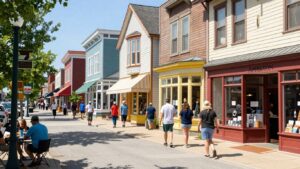
Commercial rents tell the rest of the story. Prime corridor leases in downtown Toronto have climbed to levels that make traditional retail math nearly impossible for independent operators. A storefront on Queen West that rented for $45 per square foot in 2019 now commands significantly more, squeezing margins until only chains or heavily capitalized brands can survive. This pressure has pushed viable opportunity toward service businesses with recurring revenue, digital-first models with minimal physical footprint, and skilled trades that operate from a van or a client’s home rather than a storefront.
Then there is the cost of living crisis itself, which has become a business catalyst in its own right. Toronto residents paying record rents and record grocery bills are not spending less overall; they are spending differently. Price-sensitive, high-convenience services have become remarkably sticky. The meal kit that saves a family $200 a month over restaurant takeout. The mobile mechanic who charges less than the dealership. The subscription cleaning service priced just below the threshold where cancellation feels worth the hassle. These models thrive precisely because financial pressure makes them feel essential rather than optional.
Five years ago, Toronto rewarded a different playbook: secure a visible location, build a brand, wait for foot traffic. That city is gone. The Toronto of 2024 and 2025 rewards operators who read demographic data like a weather forecast, who position where the population actually lives and works now, and who build businesses around recurring needs rather than discretionary impulse. The dim sum hall on Spadina understands this. The clothing boutiques did not.
The Business Categories Where Toronto’s Structural Demand Is Outpacing Supply
If Toronto’s economy rewards businesses built around recurring, population-driven needs, which categories have the widest gap between what people need and what the market currently provides? Not theoretical opportunities. Not generic “profitable businesses in Canada” lists. Specific openings created by the forces already reshaping this city: aging infrastructure, demographic pressure, immigration patterns, and a construction sector that cannot hire fast enough.
Home Services and Trades: The Six-Week Wait Is Your Opening
Toronto’s residential housing stock is old. Much of the inner suburbs were built in the 1950s through 1970s, and those homes are now hitting the age where everything fails at once: electrical panels, plumbing stacks, HVAC systems, roofing. The trades gap in Toronto is severe. Electricians, plumbers, and HVAC technicians are booking six to twelve weeks out in residential neighbourhoods, which means homeowners with urgent problems are left scrambling. That backlog is not a temporary blip caused by pandemic renovation fever. It reflects a structural shortage of licensed tradespeople across Ontario, compounded by retirements outpacing new apprenticeship completions. The BuildForce Canada labour market reports have flagged this gap for years.
The best business in Toronto within this category is not necessarily a full trades company. It is a fast-response residential service operation: a dispatch model that coordinates licensed subcontractors and guarantees shorter booking windows. Think of it as the logistics layer sitting on top of existing tradespeople who are too busy to handle their own scheduling, marketing, and customer communication. You do not need to swing a wrench yourself. You need to build the system that gets a wrench to someone’s basement faster than the current twelve-week timeline.
Childcare and Tutoring: The Waitlist Economy
Toronto has one of the longest childcare waitlists in Canada. Parents in many neighbourhoods register their children for licensed daycare before the child is born, and still end up without a spot. Licensed home daycares and specialized tutoring services face nearly no local saturation in many postal codes, particularly in the rapidly densifying areas along Eglinton, in Scarborough’s new condo clusters, and across the northwestern suburbs where young families are concentrating.
The non-obvious entry point here is not opening a large centre, which requires significant capital and a painful licensing timeline. It is operating a licensed home daycare or building a tutoring micro-franchise that serves specific linguistic communities. Toronto’s newcomer families often want academic support in both English and their home language, and that niche is almost entirely unserved by the big tutoring chains. A Mandarin/English math tutoring service in Markham, a Farsi/English literacy program in North York: these are not cute cultural projects. They are responses to real, measurable demand from parents who will pay a premium for something the market has not bothered to build.
Culturally Specific Food: Ghost Kitchens With a Diaspora Thesis
Brick and mortar restaurants in Toronto are closing at a punishing rate, squeezed by commercial rents that have not corrected despite rising vacancy. But ghost kitchen and delivery-only food concepts are succeeding precisely where traditional restaurants are failing. The model works because it strips out the cost structure that kills most food businesses: no dining room, no front-of-house staff, no expensive lease on a high-foot-traffic corner.
The sharpest operators are building ghost kitchens around culturally specific menus targeting underrepresented diaspora communities. Toronto has enormous Eritrean, Sri Lankan Tamil, Afghan, and West African populations whose cuisines are barely represented on delivery platforms. A delivery-only kitchen producing injera platters for the Ethiopian and Eritrean communities spread across the city, or a jollof rice operation serving the growing Nigerian population in Brampton and Etobicoke, faces almost no competition on apps where the algorithm rewards early movers in underserved cuisine categories. The overhead is manageable. The audience is already searching.
Senior Care and Healthcare Adjacent Wellness
Senior care and companion services are growing faster than the city can credential workers to fill them. Ontario’s population of adults over 75 is expanding rapidly, and the institutional care system is at capacity. This makes it a viable business for small operators with the right compliance setup: companion care, non-medical home support, wellness check services, and mobility assistance. You do not need to be a nurse. You need to understand the regulatory framework, build trust within specific communities, and hire reliably.
The best business in Toronto within this space pairs senior companion care with culturally specific service. A Cantonese-speaking companion care service in Scarborough, or a Portuguese-speaking home wellness check operation in the Dundas West corridor, fills a gap that large agencies consistently ignore because they optimize for scale, not for language and cultural fluency.
Staffing and Logistics for Construction
Toronto’s construction pipeline is enormous, with billions in active residential and infrastructure projects. The bottleneck is not capital or permits. It is people. Temporary staffing agencies that specialize in construction labour, equipment logistics coordinators, and even specialized cleaning crews for post-construction sites are all operating in a market where demand reliably exceeds supply. The entry point with the lowest capital requirement is a niche staffing operation focused on a single trade category or a single phase of the construction cycle, building depth rather than breadth in a market that rewards specialization.
Reading Toronto’s Neighbourhoods Like a Business Investor Would
Knowing what to sell is half the equation. The other half is planting it in the right square kilometre. Toronto’s geography is not a backdrop; it is an active variable in your business model. A premium wellness studio that thrives in Liberty Village would starve in Scarborough, and a culturally specific accounting practice that dominates Markham Road would be invisible on King West. The best business in Toronto is always, in part, a function of address. Here is how to read the city’s commercial zones the way an investor would.
Scarborough: Immigrant density, systematically underbuilt professional services. Scarborough’s commercial corridors along Markham Road, Sheppard East, and Ellesmere Road serve dense South Asian, East Asian, and Caribbean communities. The population is large, the spending power is real, and the supply of professional services tailored to these communities is systematically underbuilt. Authentic cuisine food businesses do well here, but the bigger opportunity sits in culturally specific professional services: immigration consulting, multilingual tax preparation, insurance brokerage, and healthcare clinics with staff who speak Mandarin, Tamil, Tagalog, or Urdu. The commercial rents are a fraction of downtown rates, and the customer loyalty in these corridors is fierce once earned. Think service businesses with deep cultural fluency, not generic franchises parachuted in.
Liberty Village and King West: B2B in a walkable format, premium wellness, startup adjacency. Liberty Village has a high density of young professionals and small tech companies, creating demand for B2B services, premium wellness, and business support services that can be delivered in a walkable format. Coworking adjacencies, boutique marketing agencies, bookkeeping firms that cater to freelancers and startups, and fitness studios with corporate membership tiers all perform here. King West extends this logic with slightly higher spending thresholds. The key insight: residents and workers in this corridor make purchasing decisions on foot. If your B2B service requires a car trip, you have already lost them. Physical proximity to your client base is the competitive moat.
North York: The family services corridor, secondary downtown for priced-out households. North York along Yonge and Sheppard is becoming a secondary downtown for families priced out of central Toronto. Condo towers filled with young parents and school-age children have created surging demand for family-facing services: tutoring centres, physiotherapy clinics, pediatric dental offices, enrichment programs, and daycare with extended hours. The City of Toronto’s neighbourhood profiles confirm the demographic shift. Professional services targeting dual-income households with children, from family law to financial planning, find a concentrated and growing market here.
Etobicoke: Trades, light industrial, and premium home services for older wealth. Etobicoke remains Toronto’s most practical commercial zone for businesses that need warehouse space, loading docks, or vehicle storage. Trades businesses, light manufacturing, equipment rental, and wholesale distribution cluster here because the zoning permits it and the rents allow it. If your business involves a fleet of vans or pallets of inventory, Etobicoke’s industrial pockets along The Queensway and in the Kipling corridor are where the math works. The residential areas, particularly around Bloor West and The Kingsway, also support premium home services targeting older, wealthier homeowners.
Distillery District and Leslieville: Experiential, creative, and artisan; foot traffic that wants to feel something. The Distillery District and its eastern neighbour Leslieville attract foot traffic that wants to feel something. Experiential retail, creative studios, artisan food production, and design-oriented businesses thrive here because the customer base actively seeks out the non-generic. This is where a ceramics studio with retail, a small-batch fermentation workshop, or an independent design consultancy can charge premium prices to an audience that values provenance and craft. The risk: rents have climbed sharply, so unit economics must support higher fixed costs from day one.
Mississauga Adjacent: The metro edge play; Toronto clients, non-Toronto overhead. For operators willing to stretch beyond Toronto’s municipal boundary, the Mississauga border zone along Dundas, Dixie, and the Airport Corporate Centre offers commercial space at significantly lower rates with access to Toronto’s full labour pool. Logistics businesses, call centres, and back-office operations that serve Toronto clients but do not need a Toronto address find their best margins here. The tradeoff is brand perception; the advantage is overhead that lets you undercut competitors paying downtown rents.
Each of these zones has its own commercial logic. The founders who struggle are the ones who pick a location based on personal convenience. The ones who succeed pick it based on where their specific customer already lives, works, and spends.
What Actually Kills Toronto Businesses: How Serious Operators Avoid It
Toronto will let you open almost anything. The city is large enough, wealthy enough, and diverse enough that nearly every business concept can find a plausible customer base. That is the seduction. The reality is that Toronto also kills businesses with a specific and repeatable set of pressures that have nothing to do with whether your product is good. Understanding these pressures is what separates the best business in Toronto from the ones that become someone else’s cautionary tale.
Start with leases. Commercial rents in Toronto often contain demolition clauses or vacancy provisions that give landlords enormous flexibility to terminate or renegotiate. A first-time business owner signs a five-year lease feeling secure, not realizing the landlord can invoke a demolition clause with relatively short notice if a condo developer comes calling. This is not a rare scenario; it is the economic engine of entire neighborhoods along Queen West, Dundas, and the Danforth. Serious operators read every clause with a commercial real estate lawyer before signing, and they negotiate fixturing allowances and termination compensation upfront. The ones who skip this step often discover their “stable” location was never stable at all.
Food businesses face a layered compliance burden that is uniquely punishing for undercapitalized operators. Municipal zoning, provincial health regulations, and Toronto’s DineSafe inspection program all create requirements that must be met before you serve a single plate. The result is a three to six month pre-opening cost window where you are paying rent, paying contractors, paying consultants, and earning zero revenue. Operators who budget only for buildout and inventory get blindsided by the carrying costs of compliance timelines. The ones who survive plan for six months of zero income and treat it as a fixed cost of entry, not a surprise.
Then there is the multicultural market fallacy. Toronto is one of the most diverse cities on the planet, and newcomers to the business landscape sometimes treat that diversity as a single, undifferentiated audience. It is not. A Filipino bakery in Scarborough, a Tamil financial services firm in Markham, and an Ethiopian restaurant on Danforth East are each embedded in distinct community networks with distinct trust dynamics, media channels, and purchasing patterns. Marketing to “Toronto’s immigrant communities” as though they share one inbox is a fast way to spend money reaching nobody. The businesses that thrive in these markets succeed because they are of the community, not adjacent to it. They sponsor the right events, advertise in the right language publications, and build referral networks through existing trust structures.
The post-2020 hybrid work shift created another graveyard. Downtown office district businesses that thrived on predictable Monday through Friday lunch traffic lost their entire economic foundation when corporate Toronto adopted flexible schedules. Some adapted by shifting to catering, adding dinner service, or pivoting to delivery. Many did not. The ones still struggling are the ones waiting for the old pattern to return. It will not. If your business model depends on five days of office foot traffic in the Financial District or along University Avenue, you are building on a foundation that no longer exists in its previous form.
None of this means Toronto is a bad place to build. It means Toronto rewards operators who do their homework with the same intensity they bring to their product. The city’s scale and wealth create real opportunity, but that opportunity sits behind a series of specific, knowable risks. The best operators treat those risks as part of the business plan, not as bad luck that happens to other people. They read the lease. They budget for the compliance timeline. They study the specific community they want to serve. They stress-test their model against current foot traffic patterns, not 2019 nostalgia.
The businesses that last in this city are not necessarily the most creative or the most passionate. They are the most prepared.
The Skills-Capital-Risk Matrix: Matching the Right Business to Your Actual Situation
Preparation matters, but preparation for what? The best business in Toronto for someone with $5,000 and deep expertise in tax compliance looks nothing like the best business for someone with $100,000 and a network in the South Asian wellness community. The question is not which business is objectively best. It is which business fits the intersection of three variables that are entirely yours: what you already know how to do, how much money you can actually deploy, and how much uncertainty you can stomach before it wrecks your sleep.
Decision Framework: Which Path Fits Your Position?
- Audit your skill first, not your idea. What do you already do well enough that someone would pay you for it tomorrow? Start there. The best Toronto businesses are built on existing competence, not on learning a new craft while also learning to run a business.
- Be honest about your real capital. Not what you could borrow. Not what you might raise. What you can deploy without catastrophic personal consequences if it takes 18 months to break even. Build your model around that number.
- Map your community before your market. Who already trusts you? What do they complain about that they cannot solve locally? That intersection is your first customer base. A warm audience of 50 people beats a cold market of 50,000.
- Match your risk tolerance to your structure. Low capital, low tolerance for uncertainty: solo service business on referrals. Moderate capital, willing to work through a licensing process: regulated service with a moat. Higher capital, high network density: brand-differentiated retail or B2B practice. Mismatching these variables is how people end up with a restaurant they cannot afford to close and cannot afford to run.
- Test before you commit. Every Toronto business category described in this article can be piloted at small scale before a lease is signed. Run the ghost kitchen out of a commissary for three months. Take on five bookkeeping clients before registering a firm. Operate the home daycare at minimum licensed capacity before expanding. The city rewards founders who validate demand before they scale into fixed costs.
If you have skill but limited capital (under $10K)
You are a bookkeeper, a licensed electrician, a tutor with subject expertise, a copywriter, a personal trainer. You have a marketable skill and almost no runway. Toronto’s labour costs have pushed a structural shift toward outsourcing. Small businesses across the GTA increasingly find it cheaper to contract a solo bookkeeper at $50 an hour than to hire a part-time employee at $25 an hour once you factor in benefits, payroll taxes, and the overhead of managing another person. The same math applies to trades, IT support, and specialized tutoring. Your startup costs are a business registration, liability insurance, and a basic website. Your competitive advantage is responsiveness and local reputation. The best business in Toronto for someone in this position is a micro-service operation built on referrals, not advertising. You do not need a storefront. You need five clients who tell five more people. This path carries low financial risk but demands high hustle and a willingness to do your own sales for the first year.
If you have moderate capital ($10K to $75K) and a willingness to learn a regulatory process
This is where Toronto’s licensing landscape, which scares off casual entrepreneurs, actually becomes your moat. A licensed home daycare, for instance, requires real paperwork through the Child Care and Early Years Act, but the demand is ferocious and the per-child revenue is strong once you are operational. Mobile service businesses (pet grooming, auto detailing, mobile car wash) can launch with a vehicle, equipment, and a City of Toronto business licence for modest sums. Ghost kitchens, operating out of commissary spaces in Scarborough or Etobicoke, let you test a food concept without signing a five-year lease on a restaurant you cannot yet afford. Each of these paths has a specific regulatory sequence. None of them are simple, but all of them are learnable. The risk here is moderate: you are deploying real money, but you are not locked into massive fixed costs. The key variable is your patience with bureaucracy and your willingness to treat the licensing process as a competitive advantage rather than an obstacle.
If you have more capital ($75K+) and can tolerate real exposure
Now you are looking at retail with a cultural anchor, a wellness clinic or allied health practice, or a B2B service firm targeting Toronto’s tech corridor. These businesses require more than money. They require brand differentiation and, critically, an existing network you can activate on day one. A South Asian beauty and wellness concept in Brampton succeeds partly because the founder already belongs to the community it serves. A cybersecurity consulting firm targeting Toronto’s fintech cluster works because the founder spent years inside that ecosystem and knows who the buyers are by name. At this capital level, the business that makes sense is one where your network compresses the timeline to first revenue. Without that network, $75K disappears fast on rent, buildout, and marketing to strangers.
The variable that outweighs capital
Across all three paths, one factor predicts speed to revenue more reliably than startup budget: community. In a city as networked by diaspora, professional affiliation, and neighbourhood identity as Toronto, businesses that launch inside an existing community consistently reach profitability faster than those that launch into the general market. A Filipino bakery that opens with a built-in customer base from a large local Facebook group skips the most expensive phase of any startup: convincing strangers to care. A fractional CFO who launches inside a coworking community of founders has warm leads from week one. Whatever your capital level, the honest first question is not “What should I start?” It is “Who already trusts me, and what do they need?”
The Operational Realities Toronto Founders Wish Someone Had Told Them Earlier
Knowing what to build is only half the work. The other half is registering it correctly, staying compliant with municipal and provincial rules, and connecting with the support systems that already exist but rarely get mentioned until you stumble across them by accident. Toronto’s operational landscape rewards founders who learn the mechanics early.
Start with legal structure. Sole proprietorships and general partnerships in Ontario are registered through ServiceOntario, a process that costs under $100 and takes minutes online. Federal incorporation, handled through Corporations Canada, gives you the right to operate under your business name across all provinces and creates a separate legal entity that shields personal assets. The choice between these paths has real tax and liability consequences that vary by business type. A freelance consultant and a food manufacturer face very different risk profiles, and the wrong structure can cost thousands in taxes or leave you personally exposed. Spend the $500 on a business lawyer’s opinion before you file anything.
Next comes the Harmonized Sales Tax. In Ontario, HST registration becomes mandatory once your annual revenue crosses $30,000, per Canada Revenue Agency rules. But many Toronto businesses benefit from registering well before hitting that threshold. If you are spending on equipment, software, office space, or inventory during your startup phase, early registration lets you claim input tax credits on those expenses. That is real money back in your pocket during the months when cash flow matters most.
Municipal licensing is where Toronto adds its own layer. Depending on your business category, you may need a specific licence from the city’s Municipal Licensing and Standards division. Personal services, food businesses, and entertainment venues each carry distinct requirements. Check the City of Toronto’s business licence directory before signing a lease; discovering a licensing barrier after you have committed to a location is an expensive mistake.
Toronto operates 83 Business Improvement Areas, each one a local organization of commercial tenants and property owners focused on a specific neighbourhood. BIA membership connects you with co-marketing campaigns, streetscape improvements, seasonal events, and sometimes grant funding that solo operators routinely overlook. If your business has a physical presence, your local BIA is one of the cheapest sources of visibility and community credibility available.
Finally, the support infrastructure. The Toronto Business Development Centre offers advisory programs, mentorship, and microloans specifically designed for early-stage companies. Futurpreneur Canada provides financing up to $60,000 paired with two years of mentorship for founders aged 18 to 39. Both programs are chronically underused by eligible founders, often because people assume the application process is competitive or bureaucratic. These organizations exist to deploy capital and expertise, and they actively want more applicants. The best business in Toronto is one that launches with every available advantage already in hand, and most of those advantages are free if you know where to look.
The Bottom Line
Here is the thing about lists like this one. They can tell you which categories are growing, which neighbourhoods are underserved, which regulatory moats are worth climbing. What they cannot do is see what you see. The person who has spent three years watching every Tamil family in their Scarborough building drive forty minutes for a specific kind of financial advice. The woman who has worked in North York’s condo towers long enough to know that every new parent on her floor is quietly desperate for a daycare spot that does not exist. The contractor who has watched the same trades company fail to show up on time, in the same postal code, for the fifth consecutive year. That knowledge is not in any database. It is not on any ranking. It is yours, and in a city that rewards specificity over generality, it is worth more than a business plan written from scratch.
Before you read another article, open another tab, or download another template: spend thirty minutes writing down three things that people in your network complain about that they currently cannot solve locally. Not problems in the abstract. Specific frustrations, repeated conversations, needs that go unmet week after week in the part of this city where you actually live and work. That list, scrawled on the back of whatever is nearby, is the most honest answer to the question of what the best business in Toronto looks like for you. Everything else is just context for a decision only you can make.
Frequently Asked Questions
Do I need to register my business before I start operating in Toronto?
Yes, in almost all cases. If you are operating under any name other than your own legal name, Ontario law requires you to register that business name through ServiceOntario before you begin trading. Sole proprietorships and partnerships can be registered online for under $100. Operating without registration can expose you to fines and, more practically, makes it impossible to open a business bank account or sign contracts in your business name. Federal incorporation is a separate process through Corporations Canada and is worth considering if you want liability protection or plan to operate across provinces.
What is the cheapest type of business to start in Toronto with under $5,000?
Service businesses built on an existing skill are the lowest cost entry point. Bookkeeping, tutoring, copywriting, personal training, cleaning services, and mobile trades assistance can all be launched for under $5,000 when you factor in registration, basic liability insurance, and a simple website. The key is that your startup costs are administrative, not physical. You are not renting space or buying inventory. You are formalizing a skill you already have and finding the first five clients willing to pay for it. In Toronto’s current labour market, that is a more achievable starting point than most people assume.
Is a food business actually viable in Toronto given the high failure rate?
It depends entirely on the model. Traditional brick and mortar restaurants in Toronto face brutal economics: high rents, high labour costs, thin margins, and a compliance burden that consumes cash before a single plate is served. Ghost kitchens and delivery-only concepts operating out of commissary spaces have a meaningfully different cost structure and are succeeding in categories where delivery platforms are underserved. The viability question is not “food business yes or no.” It is “which food model, in which format, serving which specific community.” Operators who answer those questions precisely before committing to a lease have a real chance. Those who open a general restaurant hoping foot traffic will find them are taking a very expensive gamble.
Can newcomers to Canada legally start and own a business in Toronto?
Yes. Permanent residents and Canadian citizens can register and operate a business in Ontario without restriction. Temporary residents, including those on work permits or study permits, face more complexity: the right to operate a business depends on the specific conditions of your immigration status, and some permit categories do not permit self-employment. If you are on a temporary permit and want to start a business, consult an immigration lawyer before registering anything. The rules are specific to your permit type and getting them wrong can have consequences for your immigration pathway.
What municipal permits or licenses does a home-based business need in Toronto?
It depends on the nature of the business. Many home-based service businesses, including freelance work, consulting, and tutoring, operate legally under Toronto’s zoning bylaws without a specific municipal licence, provided they do not generate significant customer traffic to the home, employ non-resident staff on site, or store commercial quantities of goods. However, certain categories, including personal services, food preparation, and childcare, require specific licences from the City of Toronto’s Municipal Licensing and Standards division regardless of where they operate. Check the city’s business licence directory for your specific category before assuming your home-based operation is exempt.
How does HST work for a new small business in Ontario, when do I have to register?
HST registration becomes mandatory in Ontario once your business revenue exceeds $30,000 in a single calendar quarter or over four consecutive quarters, per Canada Revenue Agency rules. Below that threshold, registration is voluntary. However, voluntary early registration is often financially smart: it allows you to claim input tax credits on business expenses like equipment, software, and supplies, recovering the HST you paid on those purchases. For businesses with significant startup costs, this can mean thousands of dollars back during the months when cash flow is tightest. Speak with an accountant about the right timing for your specific situation.
Which Toronto neighbourhoods have the highest unmet demand for services right now?
Based on current demographic and commercial data, Scarborough’s corridors along Markham Road and Sheppard East have significant unmet demand for culturally specific professional services. North York along Yonge and Sheppard has surging demand for family services including childcare, tutoring, and pediatric health. Rapidly densifying areas along the Eglinton Crosstown corridor are underserved across multiple categories as new condo populations arrive faster than local services can scale. The northwestern suburbs including parts of Etobicoke and the Mississauga border zone have strong demand for trades and home services. In all cases, the gap is most pronounced for services with cultural or linguistic specificity.
Is e-commerce a legitimate “Toronto business” or does location not matter?
Location matters more than most e-commerce founders expect, even for digitally native businesses. Toronto’s advantages for e-commerce include access to a large, diverse, and digitally active consumer base; proximity to major logistics infrastructure; a deep pool of marketing, design, and tech talent; and a regulatory environment that is relatively straightforward for online retail. The businesses that benefit most from a Toronto base are those serving the GTA market directly, such as same-day or next-day delivery, culturally specific products for diaspora communities, or B2B services targeting Toronto’s tech and finance sectors. Pure e-commerce businesses selling nationally or internationally can operate from anywhere, but the talent and network advantages of being in Toronto are real even for them.
What industries are oversaturated in Toronto and should be approached with caution?
General-purpose coffee shops and cafés face extreme saturation and rent pressure across most Toronto neighbourhoods. Traditional clothing retail without a strong differentiated concept or community anchor has a very poor track record. Generic fitness studios without a specific methodology or community identity are struggling as the market consolidates around established brands. Downtown lunch-focused food businesses dependent on office foot traffic remain structurally challenged. Real estate brokerage is highly competitive and commission-compressed. None of these are impossible, but all of them require a sharper differentiation thesis than “I will do it better” to justify the capital and risk involved.
Where can I find a small business mentor or advisor in Toronto for free or low cost?
Several well-resourced programs exist and are chronically underused. The Toronto Business Development Centre offers advisory services and microloans for early-stage businesses. Futurpreneur Canada provides up to $60,000 in financing plus two years of mentorship for founders aged 18 to 39. The Business Development Bank of Canada offers advisory services and financing for more established small businesses. Mentorship is also available through local BIAs and the Toronto Public Library’s small business programs. Many of these programs are free or low cost and actively seek more applicants. The barrier is awareness, not competition.
How do Toronto’s Business Improvement Areas (BIAs) actually help local businesses?
Toronto’s 83 BIAs are funded through a levy on commercial property owners within a defined geographic boundary, and that money is directed back into the neighbourhood through marketing campaigns, streetscape improvements, seasonal events, and sometimes direct grants or co-op advertising for member businesses. For a new business with a physical location, BIA membership provides access to co-marketing that would cost far more to replicate independently, a built-in network of neighbouring business owners, and a credible local voice when dealing with city hall on issues like parking, signage, or zoning. The quality and activity level varies significantly by BIA, so research your specific neighbourhood’s organization before assuming it will be active.
What is the realistic timeline from deciding to start a business in Toronto to opening day?
For a solo service business with no physical location, the timeline from decision to first paying client can be as short as two to four weeks: register the business name, open a business bank account, get liability insurance, and start reaching out to your network. For a regulated service business like a licensed home daycare or a food operation, budget three to six months for licensing, inspections, and compliance setup before you earn a dollar. For a retail or restaurant concept requiring a lease, buildout, and municipal approvals, six to twelve months from lease signing to opening is realistic, and that entire period carries fixed costs. The single most common financial mistake Toronto founders make is underestimating the length and cost of the pre-revenue phase.